
Explanation
Recovery is a deeply personal journey. When you are working to overcome an addiction, your mind and body are dealing with a lot of stress. Hypnotherapy is a safe, gentle tool used alongside regular medical treatment or counselling to help you find calm and regain control.
Hypnotherapy is a state of deep relaxation and focused attention, similar to the natural feeling of daydreaming. During this state, your nervous system quiets down, reducing the background noise of daily anxiety. Alexandre Mitellus, a qualified hypnotherapist and psychotherapist based in Ireland, works with clients in both English and French to help retrain how the mind responds to automatic urges. By working directly with subconscious associations, hypnotherapy makes it easier to adopt positive, healthy thoughts and establish long-term freedom from harmful habits. If you feel stuck repeating the same cycles, learning how to reframe these subconscious patterns through [[“I feel stuck in a habit”](https://goodwords.info/?p=778)] provides a solid foundation for sustainable recovery.
Recovery is a personal journey. When you are working to overcome an addiction, your mind and body are dealing with a lot of stress. Hypnotherapy is a safe, gentle tool used alongside regular treatment to help you find calm and regain control.
What is Hypnotherapy?
Hypnotherapy is a deep state of relaxation and focused attention. It feels similar to daydreaming.
- It calms your nervous system.
- It quiets the “noise” in your mind.
- It helps you become more open to positive, healthy thoughts.
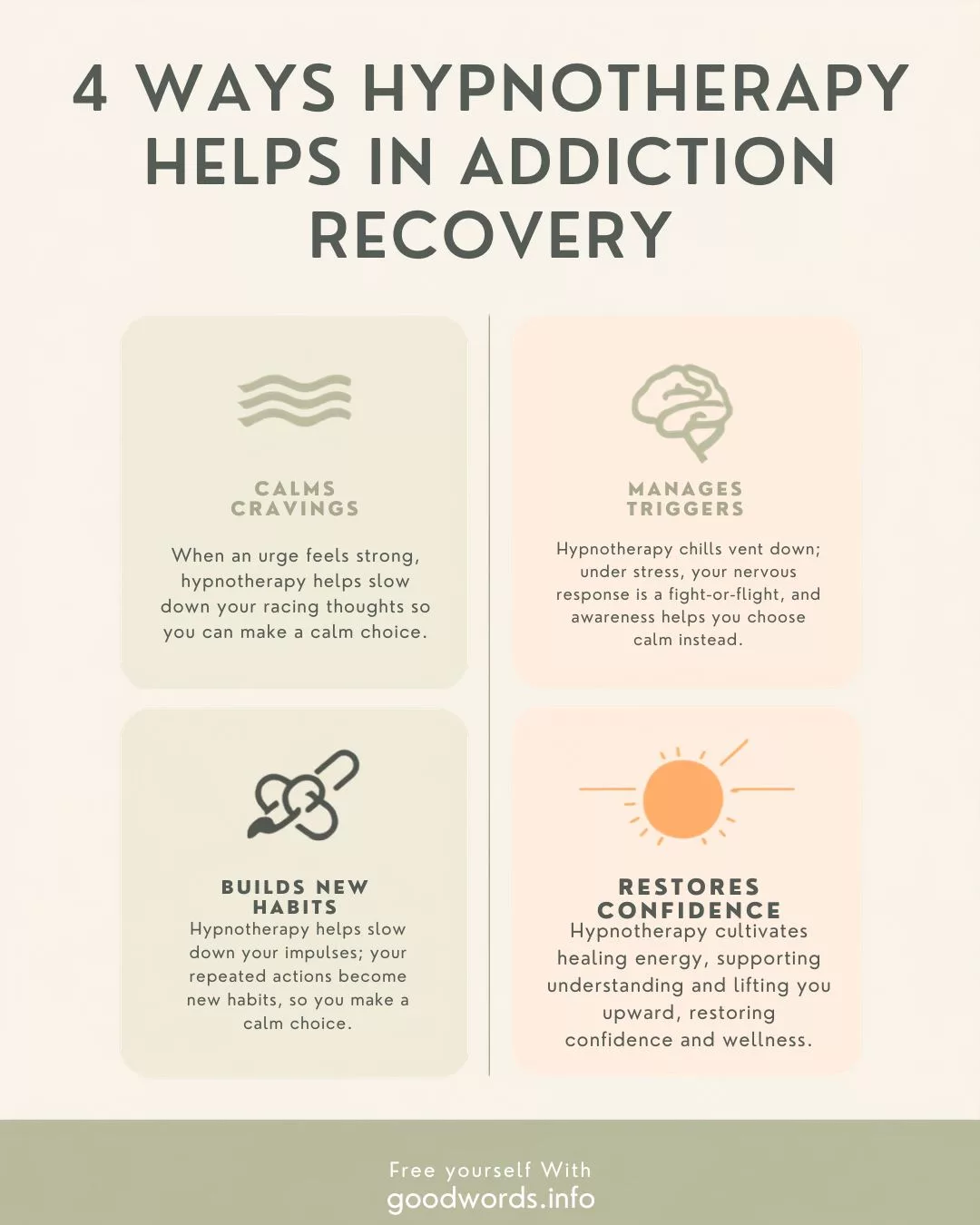
4 Ways It Supports Your Recovery
- Calms Cravings: When an urge feels strong, hypnotherapy helps slow down your racing thoughts so you can make a calm choice.
- Manages Triggers: It teaches your brain new, healthier ways to react to stress, anger, or lonely feelings.
- Builds New Habits: It rewires your daily routines, making it easier to stick to positive choices day by day.
- Restores Confidence: Anxiety makes you doubt yourself. This therapy focuses on rebuilding your self-belief and inner strength.
Quick Look: The Benefits
| What It Does | How It Helps You |
|---|---|
| Lowers Stress | Gives your mind a break from high anxiety. |
| Spots Triggers | Helps you notice a craving before it takes over. |
| Boosts Control | Strengthens your ability to say “no” to old habits. |
| Creates Hope | Reminds you that change is possible, one step at a time. |
What Happens in a Session?
You are always in complete control. A professional hypnotherapist will sit with you and talk about your goals. Then, they will guide you into a comfortable, relaxed state using breathing exercises and soothing visualization.
It is a peaceful, supportive process designed entirely around your comfort level.
Important Note: Hypnotherapy is a supportive tool. It works best when used together with your standard medical care or counseling. You do not have to do this perfectly—consistency and taking it one day at a time is what matters.

Your 1-2-3 quick guide
- Consult your GP first to establish a safe treatment plan
- Identify specific emotional triggers and background stressors with your therapist
- Practice self-hypnosis and stop-replace techniques to maintain long-term sobriety
Hypnotherapy FAQ
What is hypnotherapy and how does it feel?
Hypnotherapy is a state of peaceful relaxation and focused attention, similar to daydreaming, where you remain fully aware and in complete control throughout the process.
Can hypnotherapy replace standard medical care or addiction counselling?
No, hypnotherapy is a supportive complementary therapy that works best alongside medical care, support groups, and standard psychotherapy.
How many hypnotherapy sessions will I need for lasting change?
The number of sessions varies per individual, but structured programmes typically range from four to seven sessions, often supported by personalized audio recordings for daily home practice.
Will I lose control or be made to do something against my will?
You are always in complete control during a session and cannot be prompted to say or do anything that goes against your core values.
How does hypnotherapy help with physical cravings and stress?
It lowers nervous system arousal and cortisol levels, teaching your mind to pause, process stress calmly, and replace automatic urges with healthier responses.
Is hypnotherapy suitable for everyone recovering from substances?
Hypnotherapy is suitable for most people who sincerely desire change, provided they have consulted their GP first to ensure medical stability.

