
Explanation
Imagine you are a superhero who is afraid to trip on your cape while everyone is watching. Even superheroes trip sometimes, and that is okay—it just shows they are real people. A freeze is just your brain taking a tiny nap because it got a little bit confused by all the noise. When suddenly all eyes turn toward you in a meeting, during a presentation, or in a casual social gathering, your mind can feel as though it abruptly halts. Words seem to disappear, muscles tighten, and your thought process feels suspended in time.
Why This Happens: This is the “Law of Anticipated Judgment” at work. Your brain treats social attention as a “threat to survival,” relying on “untrained learnings” that say “perfection is the only way to be safe”. This leads to a “battle of wills” where your fear of failure makes your “Engine” cross the peak of the curve into “Strain” and “Rust-out”.
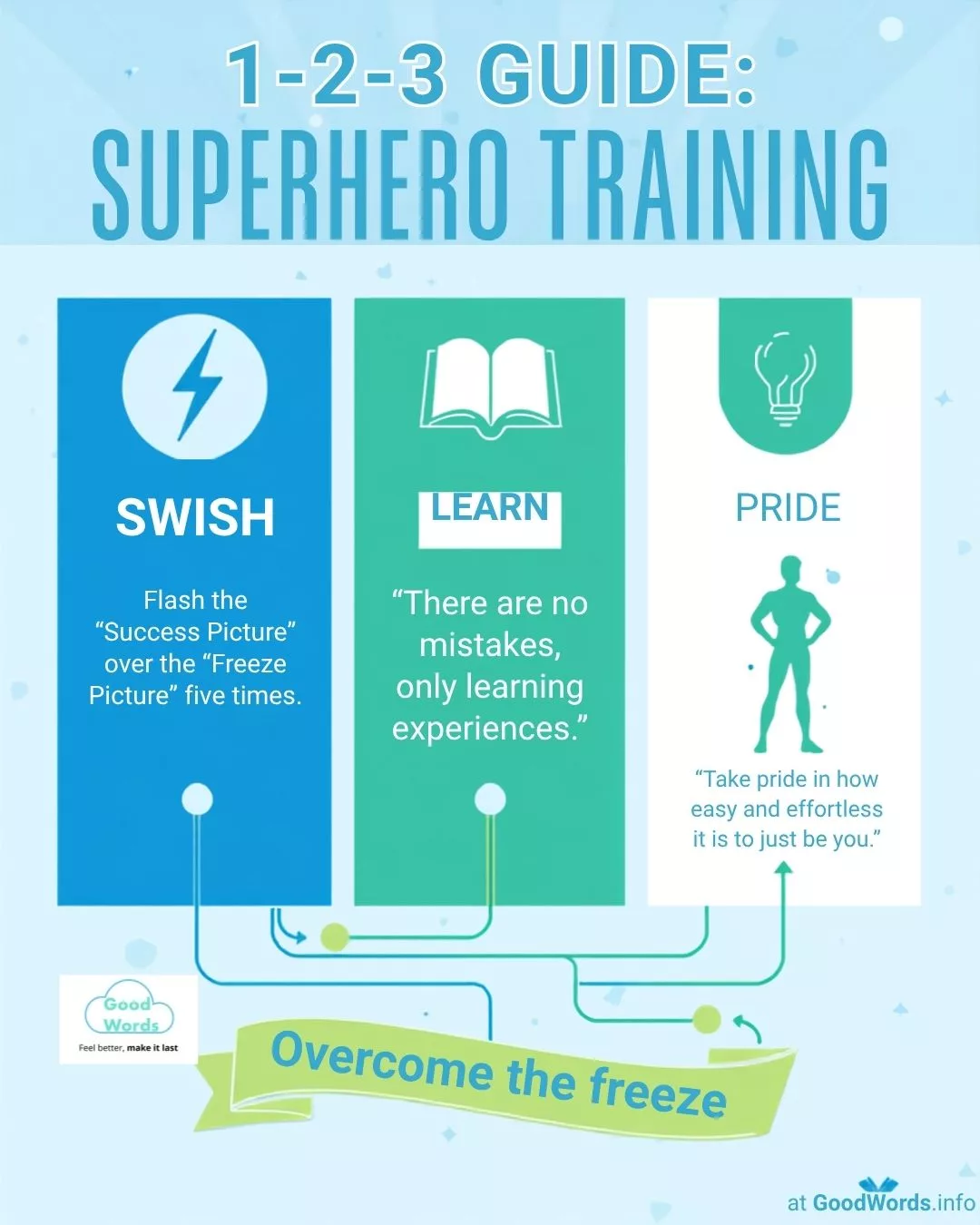
How to Fix It: Use the “Swish Technique” to reprogram your mind for “calm confidence”. Quickly replace the “Moment of Anxiety” picture with a “Moment of Achievement” picture where you are “smiling and master of the situation”. By “pre-training” your brain, you “bypass the watchman” at the door of your mind.
Context: The Yerkes-Dodson Law shows that we need a “little bit of pressure” to perform, but too much makes us “freeze”. Hypnosis helps you stay in the healthy “Stretch” zone by using the “Right Brain’s” power of visualisation.

Your 1-2-3 quick guide
- Recognise the freeze response as a temporary protective mechanism of your brain
- Use the Swish Technique to swap anxiety images with calm achievement pictures
- Practise mental visualisation to maintain performance in the healthy Stretch zone
Hypnotherapy FAQ
What is hypnotherapy and how does it work?
Hypnotherapy is a safe, evidence-based therapeutic approach that utilizes focused relaxation and heightened awareness to access the subconscious mind. In this comfortable state, clients can reframe unhelpful thought patterns, reduce physical tension, and establish healthier emotional habits.
Will I lose control or be asleep during a hypnotherapy session?
No, you remain fully conscious, aware, and in control throughout the entire session. Hypnosis is a state of guided relaxation and focused attention, similar to being absorbed in a book or daydreaming, where you can accept or decline suggestions at will.
How many hypnotherapy sessions are typically needed to see results?
The number of sessions required varies based on individual needs and goals. Many clients notice positive shifts within three to six sessions, whilst specific or complex concerns may benefit from structured ongoing support.
Is hypnotherapy suitable for everyone experiencing performance anxiety?
Most people who can follow simple instructions and possess a willingness to participate can experience hypnosis. Your practitioner will conduct an initial assessment to ensure that hypnotherapy is the most suitable approach for your situation.
Can hypnotherapy help with physical symptoms caused by stress?
Yes, hypnotherapy is particularly effective for psychosomatic symptoms where emotional stress manifests physically, such as muscle tightness, digestive discomfort, shallow breathing, or the freeze response.
What professional accreditations should I look for in a hypnotherapist?
You should look for practitioners registered with recognised professional associations, such as the Institute of Clinical Hypnotherapy and Psychotherapy (ICHP) or the European Association for Psychotherapy and Hypnotherapy (EAPH), ensuring rigorous training standards, ethical guidelines, and full professional insurance.
Read more on goodwords.info

